
The rot in Canada’s system of picking federal judges
The rot in Canada’s system of picking federal judges
It’s funny, but the letters recently released by the Canadian Judicial Council in the Lori Douglas matter reveal the real rot in the system — and it has little to do with the so-called “naked judge” scandal.
The rot is in the arrogance of lawyers and judges who perpetrate the fiction that the Canadian system of picking federal judges (which means not just those on the Supreme Court, but also the 1,115 superior and appeal court judges in every province and territory) is pristine and brilliant.
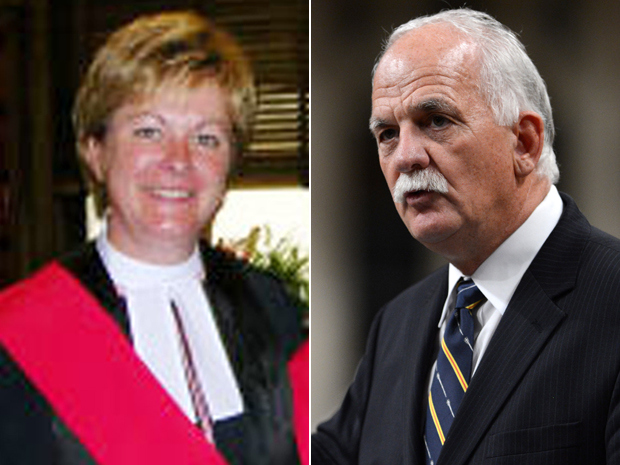
Rather, as the appointments of Manitoba judges Douglas (2005) and the more recent one of former MP and justice minister Vic Toews (2014) illustrate, the system is inherently political, secretive and riven with cronyism.
That it may sometimes also result in a brilliant appointment — and both of those I mention may qualify as such some day — is but a happy accident.
Associate Chief Justice Douglas, of course, is the judge whose husband, Jack King, in mid-mental breakdown posted bedroom pictures of her on a hard-core porn website and then tried to solicit a client to have sex with her — all without her consent or knowledge, as he has long admitted, she has always insisted and the evidence tends to support.
That client, one Alex Chapman, first attempted in 2003 to blackmail Mr. King (with some success, in that Mr. King paid him $25,000 to go away), and then, his natural conspiratorial bent encouraged by his own lawyer, seven years later launched a complaint against Judge Douglas, who by then was a rising star on the Manitoba bench.
It is evidence in that complaint that an inquiry committee of the Canadian Judicial Council began hearing in the summer of 2012.
The committee’s fairness to the judge quickly became a huge issue and the whole thing careened off the rails, with independent counsel Guy Pratte resigning (and with the CJC’s release of its correspondence with Mr. Pratte, with good reason) that fall, and the members of the inquiry committee following suit more than a year later.
(The CJC had argued the letters were sacred and covered by solicitor-client privilege, bizarre since the role of Mr. Pratte as “independent counsel” was to be independent, and that it was above judicial scrutiny. A federal court judge found there was no solicitor-client relationship and ordered the release of the letters. The CJC released the letters, but in the context of an announcement that it was appealing the decision — in other words, the CJC still believes it was right. Oh yes, as an added fillip, the CJC also wants the new inquiry committee to get cracking and says, despite its appeal, the hearing should resume ASAP.)