
Four-car LRT project’s price tag hits $300M
Four-car LRT project’s price tag hits $300M
red Wong, Calgary’s former transit director, can vaguely recall first hearing complaints the LRTs were overcrowded.
It wasn’t long into the start of his career planning CTrain frequency, in the mid-1980s.
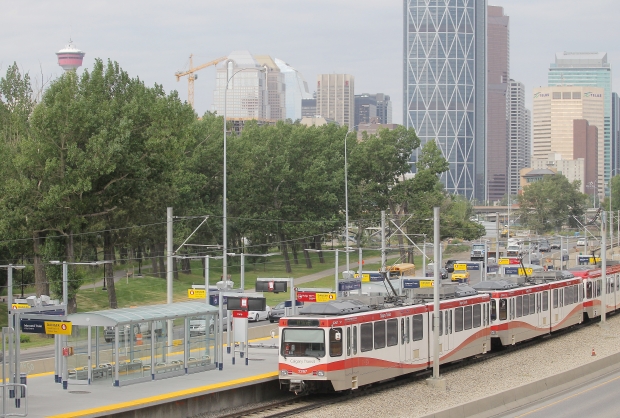
A generation later, the LRT network has gotten longer but the trains haven’t — they just got more and more packed, more people filling them at more stations.
There’s a bit of transit jargon to describe what people on the south line experience in peak periods: crush loads. If you’ve tried to squeeze on at Anderson station at 7:30 a.m., that term may ring familiar.
More breathing room is finally on its way, with construction of the last platform extensions due to wrap this year, and new trains arriving to allow extended chains by the end of 2015.
The four-car train project has been underway since 2007. The entire west LRT line started later and finished sooner.
Expanding the whole network for bigger LRT chains, from the stations to the electrical upgrades to extra cars, has quietly totalled $300 million, according to figures Calgary Transit provided.
That’s greater than the combined cost of the three newest stations on the northeast leg (Saddletowne, Martindale) and northwest (Tuscany).
“That’s incredible,” said southwest Coun. Diane Colley-Urquhart. She remembers the outcry about sardine trains when she first sought election in Canyon Meadows in 2000.
“It always costs more when you have to retrofit. I wish we’d have had the foresight 10 years ago to get into the four-car platforms.”
Construction has taken seven years, starting downtown then extending outward to stations that kept handling passengers even while they were being upgraded. Of the 22 platform extensions outside the core, only Chinook LRT was closed for an extended period.
Calgary Transit had made provisions for longer platforms when it developed the CTrain line to launch in 1981. Edmonton built extended LRT platforms from the beginning, and now can — and sometimes does — run five-car chains to give more comfortable rides to Oilers game crowds or during the morning rush.
But look where building longer platforms and underground stations got Edmonton: it has only one train route, with one-third the ridership of Calgary’s 300,000-person-a-day light rail network.
“In Calgary, we were able to to develop faster because we did it more cheaply,” Wong said.
The city was still building three-car platforms as late as 2001’s Fish-Creek Lacombe LRT, though all stations since were designed to handle four-car chains.
To compensate for stubbier platforms, officials have added more frequent trains, Wong said. Though they’re running out of room to jam more peak-period trains onto downtown 7th Avenue.
Four-car service will give the city 33 per cent more capacity per chain. There’s room to fit up to 200 people per car, said Chris Jordan, manager of strategic transit planning.
By the time a next full order of new vehicles has arrived by late 2017, the city will be able to run longer trains on three-quarters of peak period runs along the Tuscany-Somerset “red” line, he said.
That route will be Calgary Transit’s focus for bigger trains, because managers deem the crunch along the south leg is turning users away.
http://www.calgaryherald.com/news/calgary/Four+project+price+hits+300M/10089255/story.html