
Ilhan Omar Endorsed Somalia’s New President. Four Days Later, Omar’s Brother-in-Law Had a Powerful Job in His Administration
 By David Steinberg
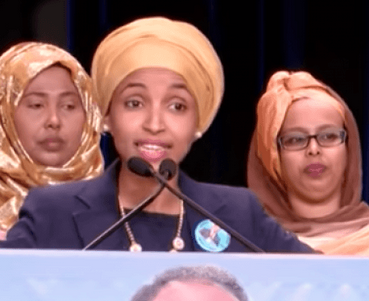
Rep. Ilhan Omar (D-MN) became the first Somali-American legislator in United States’ history when Minnesota’s House District 60B elected her on November 8, 2016. The distinction won Omar immediate fame and influence in Somalia, which was entering the final stretch of a critical presidential election of its own.
According to prominent federal security clearance defense attorney Sean Bigley (read below), Omar’s documented actions in the weeks that followed would almost certainly prevent any applicant with such a background from obtaining or keeping a U.S. security clearance.
Ilhan Omar is now a U.S. congresswoman, however. Elected federal officials are exempted from the arduous security clearance process; they hold de facto clearances once sworn in to office. Further, Omar will likely be privy to a significant amount of classified national security information this term. Speaker Nancy Pelosi has granted Omar’s request for a seat on the House Foreign Affairs Committee.
“Corruption … affects virtually every aspect of the Somali society: from public officials’ misuse of public goods for private gain and the solicitation of bribes in exchange for basic services to the clan-based patronage networks used to obtain employment and political appointments.” — Transparency International, 2018
The common hyperbole for describing government corruption — “rampant,” or “endemic” — does not help adequately illustrate Somalia’s recent administrations. “As bad as it gets” does the job, literally: Transparency International, the massive NGO dedicated to exposing public-sector corruption, has placed Somalia dead-last among all nations on Earth in its annual “Corruption Perceptions Index” — for 11 consecutive years. Somalia has occasionally managed to tie, though never outrank, North Korea.
Any significant involvement by a U.S. resident in Somalia’s election process would likely raise eyebrows at DHS.
On December 20, 2016, just a few weeks after her election to Minnesota’s state legislature, Ilhan Omar was in Mogadishu with then-President Hassan Sheikh Mohamud, a favorite for re-election. He reportedly invited her to appear with him prior to the election taking place.
Omar likely met at least one other Somali presidential candidate on her trip. According to a speech by her soon-to-be husband Ahmed Hirsi, Ilhan had just flown from Nairobi to Mogadishu on a plane with former Somali Prime Minister Mohamed Abdullahi Mohamed, known as “Farmaajo” (“Cheese”).
Farmaajo — a U.S. citizen who, inconceivably, had boarded that plane as a Buffalo, NY, cubicle employee of the New York Department of Transportation — was the eventual surprise winner of Somalia’s presidency on February 8, 2017.
The New York Times deemed Farmaajo’s bribe-fueled win “one of the most fraudulent political events in Somalia’s history.” In the run-up, “some Parliament seats had gone for more than $1 million each”:
The entire process has been so bad, several analysts said, that the Shabab militant group, one of the deadliest Islamist organizations in the world, isn’t even trying to derail the vote because the corruption free-for-all almost makes the militants look upstanding by comparison.
Perhaps coincidentally, President Trump issued Executive Order 13769, which included the 90-day provisional “Travel Ban” on Somalia and six other countries, on January 27.
Farmaajo was sworn in as president on February 16.
On February 20, Farmaajo nominated Hassan Ali Khayre to be Somalia’s prime minister by submitting his name for Parliament approval.