
Why Did so Many Fall for the Covid Narrative?
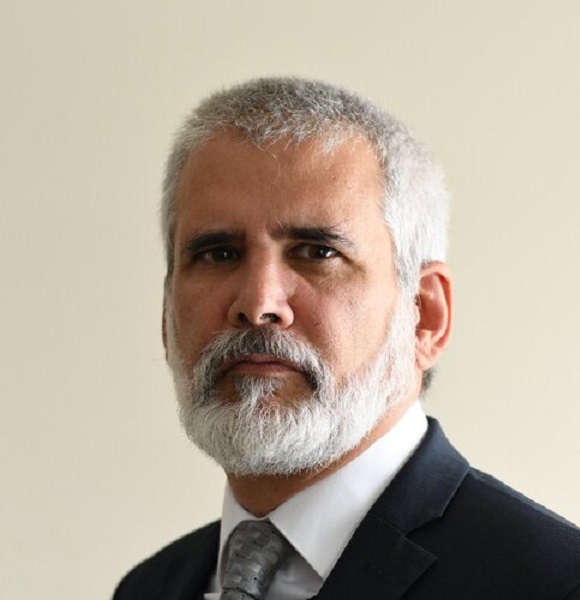
by Dr. Robert Malone
Dr. Robert Malone and his wife, Dr. Jill Glasspool-Malone, are experienced authors and biotechnology researchers who have gained an international following during the Covid pandemic by scientifically questioning the official narrative and making sense of its ensuing chaos. He pioneered mRNA vaccine technology in the late 1980s, and she specializes in biotech and immunology especially as regards public policy and federal regulatory issues. The New American is honored to print this cover-story article with the permission of Drs. Malone. It is adapted from an excerpt of their upcoming book Lies My Gov’t Told Me, and the Better Future Coming, due for publication in June, and from the substack “Who is Robert Malone.”
A hidden global coup uses mass-formation psychosis, propaganda, and corporatism to promote its transhumanist agenda and the fourth industrial revolution.
Propagandists, governments, and the World Economic Forum (WEF) are using mass-formation psychology to sway large groups of people to act for the benefit of the propagandists’ objectives. Although a major crisis — war, hyperinflation, or a public-health emergency, for example — can be extremely useful to a propagandist, these psychological tactics can be applied even without strong evidence of a crisis; the leader just has to be compelling enough.
One example involves the almost global acceptance of mask use over the past two years. Because National Institute of Allergy and Infectious Diseases Director Dr. Anthony Fauci and his acolytes at the U.S. Centers for Disease Control and Prevention (CDC) insisted that masks work, public acceptance of a very intrusive element into people’s lives was almost universal. Those who have become hypnotized by the mass-formation process either reject outright or dismiss as irrelevant ample data demonstrating the lack of effectiveness of masks for preventing the spread of the SARS-CoV-2 virus. People even accepted the illogic of masking children without question, despite clear and compelling evidence of harm.
Paul Joseph Goebbels, chief German propagandist for the Nazi Party, served as Reich Minister of Propaganda from 1933 to 1945. A true master, he was arguably the creator of the concept that the State can control people by introducing propaganda into news, enabling it to manipulate entire populations. Goebbels’ wicked brilliance exploited racism as a tool to promote German nationalism, thereby mobilizing and motivating Germany to engage in a globalized war for political, military, and economic dominance. Leaders and governments have studied his writings and speeches on propaganda ever since, much as the writings of Niccolò Machiavelli continue to be read as a cornerstone of modern interstate realpolitik. Examples of Goebbels’ insights include the following:
There was no point in seeking to convert the intellectuals. For intellectuals would never be converted and would anyway always yield to the stronger, and this will always be “the man in the street.” Arguments must therefore be crude, clear and forcible, and appeal to emotions and instincts, not the intellect. Truth was unimportant and entirely subordinate to tactics and psychology.
If you tell a lie big enough and keep repeating it, people will eventually come to believe it. The lie can be maintained only for such time as the state can shield the people from the political, economic, and/or military consequences of the lie. It thus becomes vitally important for The State to use all of its powers to repress dissent, for the truth is the mortal enemy of the lie, and thus by extension, the truth is the greatest enemy of The State.
Ghent University psychotherapist Dr. Mattias Desmet describes this as mass-formation psychosis, which Goebbels applied to practical politics within a nation-state. Many of Goebbels’ contemporaries promoted the theory, which concerns the formation of a “mass” or crowd of people. Scholars including Gustave Le Bon, Freud, McDougal, and Canetti were leading intellectual contributors to his thinking.
Le Bon was a French social psychologist who many acknowledge as founder of the study of crowd psychology. He defined a “crowd” as a group of individuals united by a common idea, belief, or ideology, and he believed that when an individual becomes part of a crowd, he undergoes a profound psychological transformation. The person ceases to think independently, instead relying on group synthesis of a set of simplified ideas. Once the group incorporates its ideas, individuals in the group cease to psychologically exist as independent minds. They are functionally hypnotized. Le Bon maintained that a group typically forms around an influential, unifying idea; this idea propels the group, or mass, toward a common goal. However, he also concluded that crowd members never create these influential ideas. Instead, a leader or set of leaders gives them to the crowd. Additionally, according to Le Bon, in order for an idea to unite and influence a crowd, it must first be dumbed down to a level that the entire crowd can easily understand.